
The electrolyte playbook: how insurgent brands beat Gatorade by not competing with it
LMNT, Liquid IV, and Nuun carved out a $38B category. The European market is still wide open.

Welcome to The Food Stack, a weekly newsletter about investing in the future of food. Written by Vincent Kuiper, founder of GOTA Ventures, an international angel syndicate investing in seed-stage European foodtech and consumer brands.
Contents
The Setup: Electrolytes are everywhere. The science behind them is thinner than you think.
Why Now: GLP-1 drugs, wellness culture, and a $1.5 billion powder sachet category that barely existed five years ago.
What the Winners Got Right: LMNT ($200M+ revenue, ~$6M raised), Liquid IV (Acquired by Unilever and one of its fastest-growing brands), and Nuun (acquired by Nestle). Three strategies for beating Gatorade.
What Went Wrong: Celebrity entrants, copycat formulas, and the question nobody wants to answer.
The Patterns: Five lessons on building in a category where the product is simple and the incumbent controls 46% of the market.
Is There Room Left: Why Europe is wide open and what it would take to win.
Takeaways: What founders and investors should remember.
The Setup
Electrolytes are one of the fastest-growing categories in consumer food and beverage. The global market is valued at roughly $38 billion and growing at 6 to 8% annually. Powder sachets alone have become a $1.5 billion category in the U.S., with volume up 15% in 2024 while most ready-to-drink categories were flat.
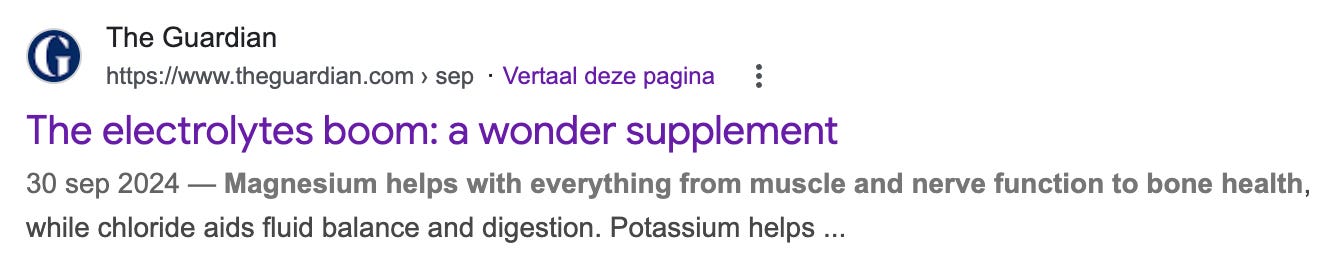
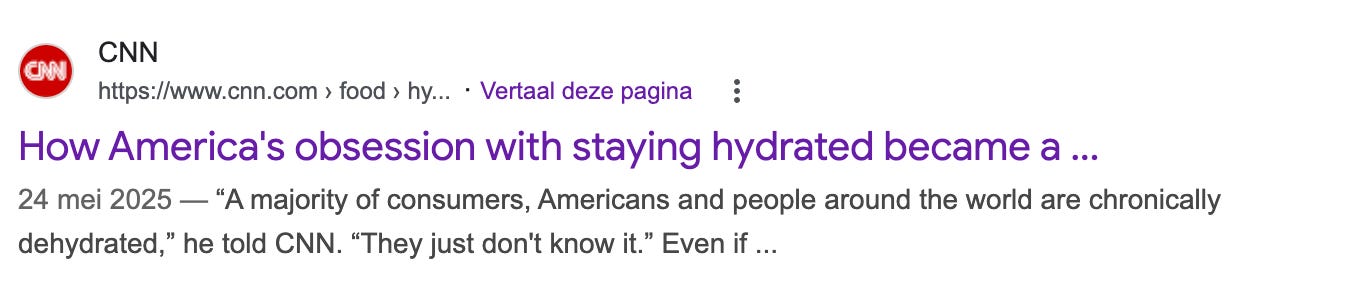
The products are everywhere: gym bags, office desks, festival grounds, kitchen counters. LMNT sponsors nearly every major health podcast. Liquid IV is in 80,000 retail stores. Steph Curry and Michelle Obama just launched PLEZi. Alex Cooper launched Unwell Hydration. Novak Djokovic backs Waterdrop.
Here is the tension. Electrolytes are essential minerals: sodium, potassium, magnesium, calcium. They regulate fluid balance, nerve function, and muscle contractions. You lose them when you sweat. All of that is real science. But for most people with access to clean water and a balanced diet, a banana, a pinch of salt, and a glass of water do the same job as a $1.50 sachet. Multiple registered dietitians confirm this: unless you are exercising intensely, recovering from illness, or following a restrictive diet like keto, you probably do not need an electrolyte supplement.
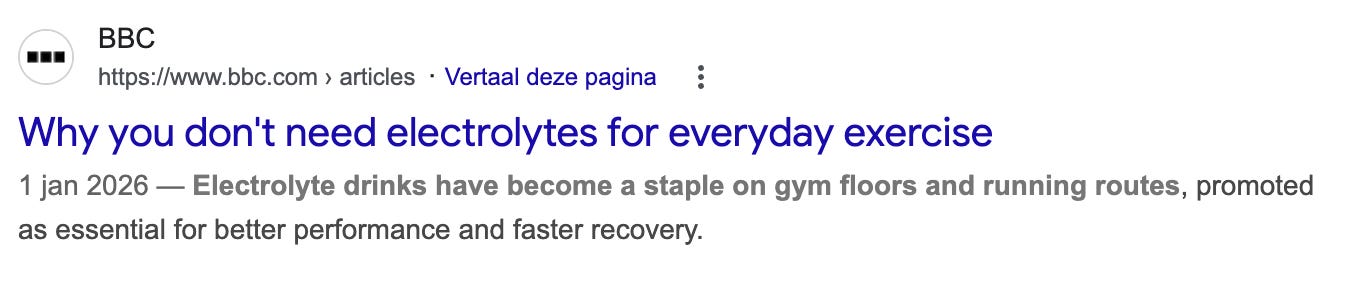
So the question for investors is not whether electrolytes work. They do, in specific contexts. The question is whether the brands built around them have real defensibility, or whether this is a marketing-driven category where the moat is the Instagram ad, not the formula.
Why This Category / Why Now
Four forces created this market.
The first is the wellness shift. Hydration has become a lifestyle identity. TikTok’s #WaterTok trend normalized the idea that drinking plain water is insufficient. Influencers and podcasters (Andrew Huberman, Peter Attia, Robb Wolf) positioned sodium supplementation as a performance hack. The category shifted from “for athletes after a workout” to “for everyone, every day.” Liquid IV’s CEO captured it precisely when he said the brand repositioned from sports recovery to “the business person, the mom, and the gym bunny.”
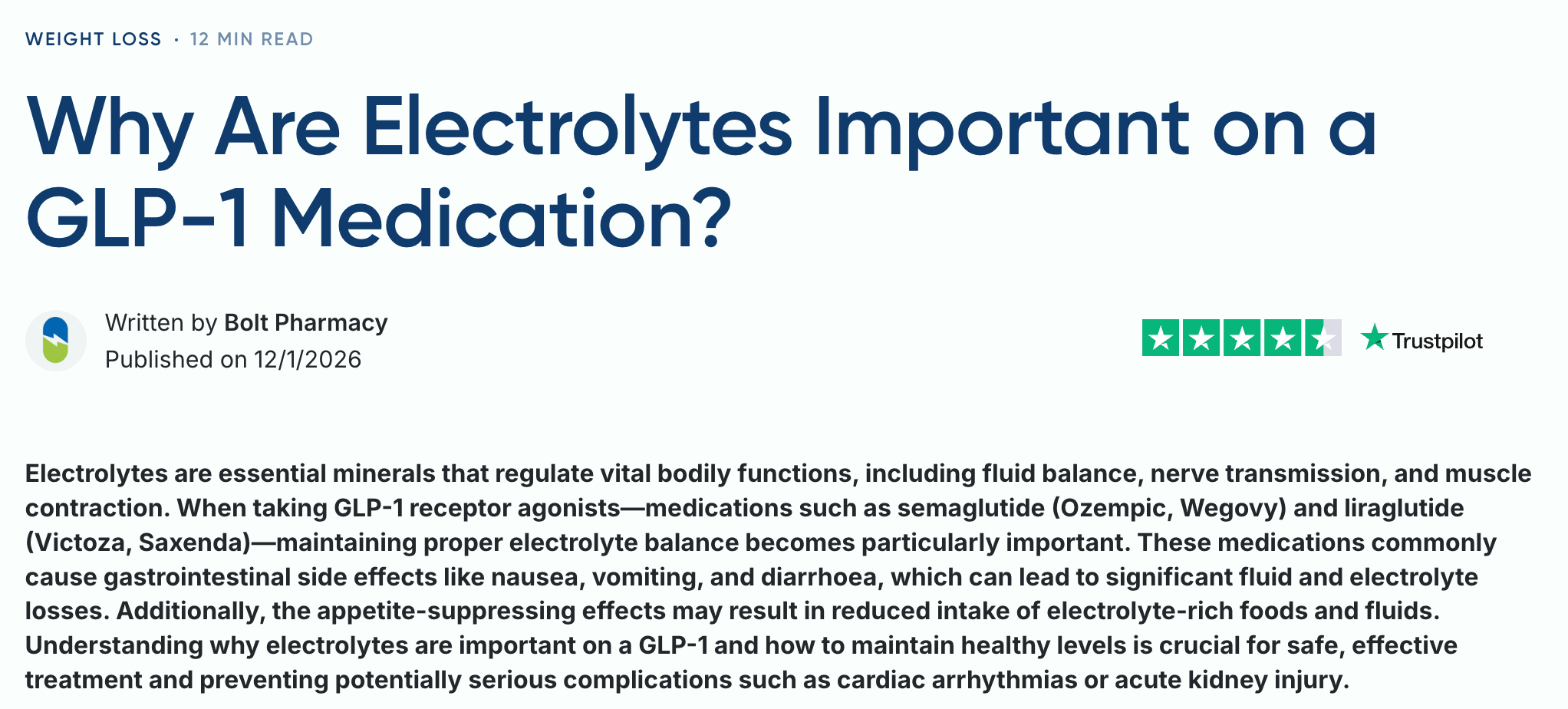
The second is GLP-1 adoption. Consumers on weight loss medications like Ozempic and Wegovy eat less, which means they consume fewer electrolytes through food. Dehydration is a common side effect. This has created a new, fast-growing consumer segment that needs electrolyte supplementation for medical rather than lifestyle reasons. GLP-1 users are projected to make up 35% of food and beverage sales by 2030.
The third is the powder format revolution. The single-serve sachet (pioneered by Liquid IV and LMNT) solved a distribution problem. Traditional sports drinks like Gatorade are heavy, require refrigeration, and take up shelf space. A powder packet fits in a gym bag, a purse, or a desk drawer. It weighs almost nothing to ship. And it has no expiration urgency. The format unlocked DTC subscription models, e-commerce, and occasions that bottled drinks could never reach.
The fourth is the “anti-seed oil” movement. A growing segment of health-conscious consumers actively avoids canola, soybean, and vegetable oils, and that same consumer is skeptical of Gatorade’s 34 grams of sugar per bottle. LMNT built its entire brand on this consumer: zero sugar, zero artificial ingredients, high sodium. The positioning is “what Gatorade should have been.”
The market structure makes this interesting for investors. Gatorade still holds roughly 46% of U.S. sports drink market share. Powerade holds another significant chunk. But the insurgent brands are not competing in the same format. They are competing in powder sachets, tablets, and lifestyle hydration, which is a subsegment growing far faster than the overall category. It is a classic disruption pattern: attacking the edges while the incumbent defends the core.
What the Winners Got Right
LMNT is the capital efficiency story of this category. Founded in 2018 by Robb Wolf, a former research biochemist and prominent figure in the paleo and keto communities, LMNT has grown to over $200 million in annual revenue with approximately 20% net margins. Their growth has been impressive, especially in the first years: $7 million in ‘20, to $36 million in ‘21, to $78 million in ‘22. The company raised roughly $6 million in total capital. That makes it one of the most capital-efficient consumer brands in any category, comparable to Graza’s trajectory in olive oil. They grew from $7 million revenue in 2020 to $36 million in 2021,
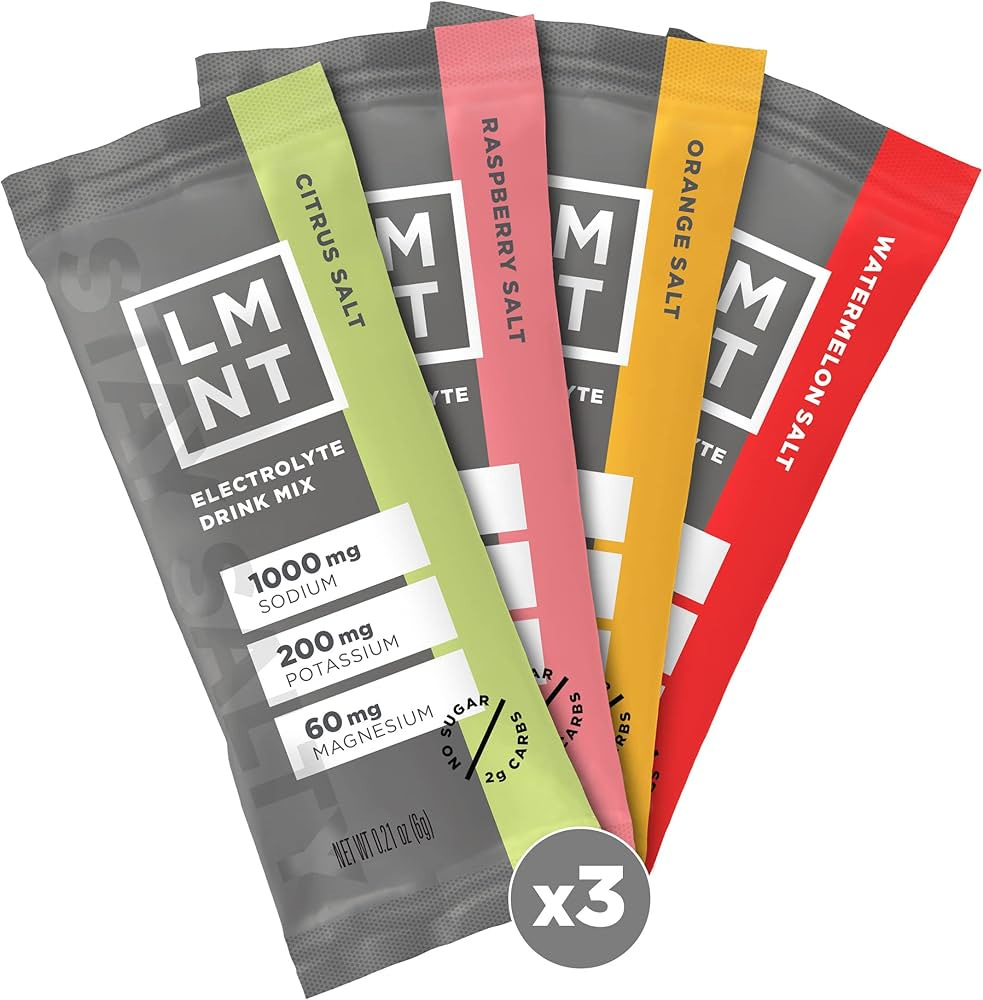
The formula is deliberately simple: 1,000mg sodium, 200mg potassium, 60mg magnesium. Zero sugar. Zero artificial ingredients. Stevia for sweetness. That simplicity is the point. LMNT’s thesis is that most people, especially those on low-carb diets, are sodium-deficient, and that existing sports drinks massively under-deliver on sodium while loading up on sugar.
The distribution strategy is what separates LMNT from every other electrolyte brand. Rather than spending on Instagram ads or celebrity endorsements, LMNT invested heavily in podcast sponsorships, specifically long-form health and science podcasts. The brand became a fixture on Huberman Lab, The Drive (Peter Attia), and Modern Wisdom (Chris Williamson). These are multi-minute integrations where the host explains the science of sodium and hydration, often using LMNT’s own research blog as a source. The result is a trust loop that traditional advertising cannot replicate: the audience trusts the host, the host trusts the science, and the science points to the product.
LMNT was profitable from year one. It grew primarily through DTC and subscription, building a base of over 250,000 customers before expanding into select retail. The free 8-pack sampling program drove massive list growth at low customer acquisition cost. The company has roughly 90 employees.
For investors, the LMNT case is compelling for a specific reason: it proves that a radically simple product can build a massive brand if the distribution channel is right. The product itself is three minerals in a packet. The moat is the community.
Liquid IV is the scale and exit story. Founded in 2012 by Brandin Cohen, Liquid IV was acquired by Unilever in 2020 for an undisclosed price (estimated in the hundreds of millions). The brand had reached $100 million in revenue within its first five years. Today, Liquid IV is the largest brand in Unilever’s EUR 1.9 billion Health and Wellbeing division and is on track toward $1 billion (!) in net sales. It is available in over 80,000 U.S. retail stores and expanding internationally. Unilever recently invested $80 million to expand Liquid IV’s production facility in Missouri.
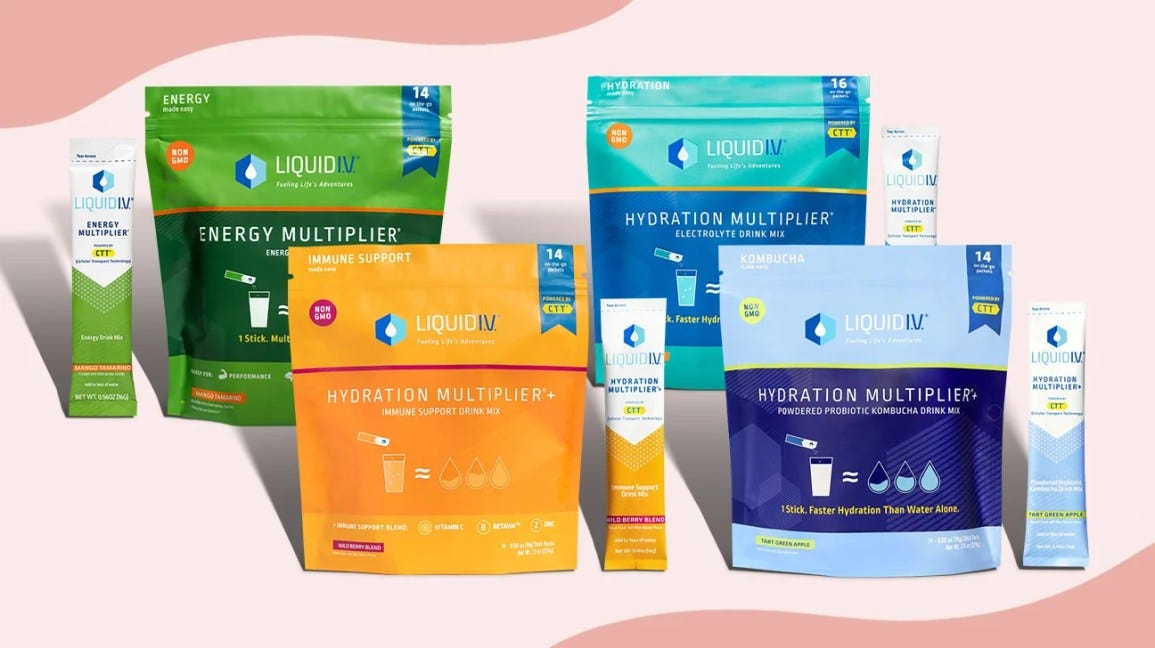
The formula is different from LMNT in important ways. Liquid IV contains 500 to 630mg of sodium (roughly half of LMNT), 370mg of potassium, added B vitamins and vitamin C, and 11 grams of sugar per serving. The sugar is deliberate: Liquid IV is built on the sodium-glucose co-transport mechanism, a clinically established pathway where glucose helps the body absorb sodium and water faster. This is the same principle behind the World Health Organization’s Oral Rehydration Solution, which was designed to treat acute dehydration in developing countries.
The strategic insight was repositioning. Liquid IV started as a sports recovery product. Under Unilever, it broadened to everyday wellness: hangovers, travel, festivals, illness recovery, and general hydration. The brand sponsors Coachella. It markets to new mothers, business travelers, and college students. That repositioning from niche to mainstream is what turned a $100 million brand into a potential billion-dollar one.

The trade-off is ingredient quality. Liquid IV’s 11 grams of sugar (from cane sugar and dextrose) and its use of silicon dioxide and tartaric acid put it at odds with the clean-label trend. The sugar-free version uses allulose and stevia, but the original formula remains the bestseller. For health-conscious consumers, this creates an opening for competitors.
Nuun is the format innovation and exit story. Founded in Seattle in 2004, Nuun pioneered the effervescent electrolyte tablet, separating electrolyte replacement from carbohydrates for the first time. Drop a tablet in water, wait for it to dissolve, drink. The format was portable, low-calorie (roughly 10 calories per tablet, 1 gram of sugar), and perfectly suited for endurance athletes who wanted electrolytes without the sugar load.
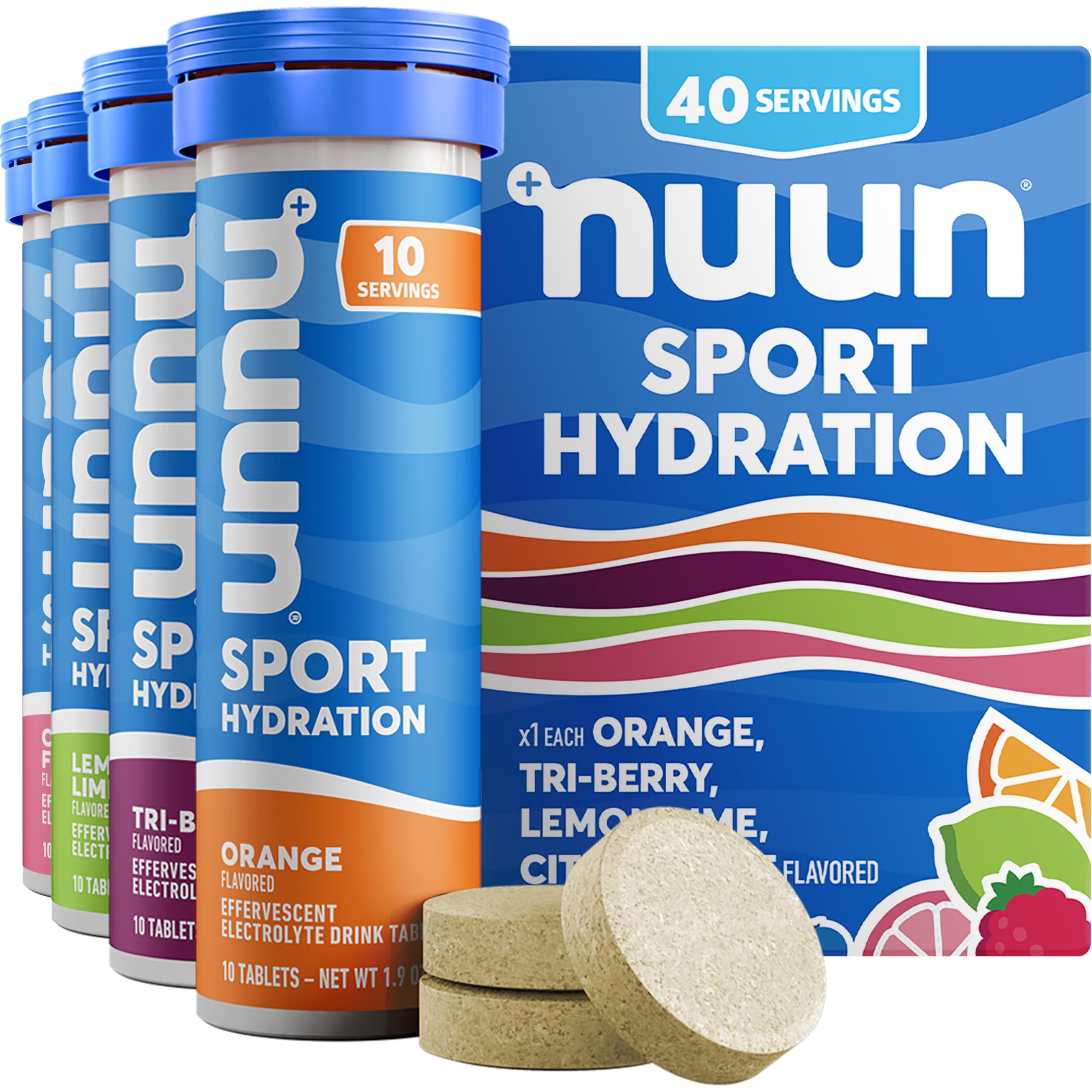
Nuun became the number one selling sports drink supplement brand in running, cycling, outdoor, and natural foods stores. TSG Consumer Partners acquired a stake and helped expand the product line into immunity, energy, rest, and general wellness. In 2021, Nestle Health Science acquired Nuun for an undisclosed sum, adding it to a portfolio that includes Vital Proteins, Garden of Life, and Nature’s Bounty. In 2025, TSG bought back a minority stake.
Nuun’s lesson for investors is about format defensibility. The effervescent tablet is harder to replicate than a powder sachet. It requires different manufacturing equipment, dissolves differently, and creates a distinct user experience. While anyone can put salt and potassium in a packet, the tablet format gave Nuun a functional moat that powder brands lack.
What Went Wrong (or: The Risks)
The biggest risk in this category is the one nobody in the industry wants to talk about: for most consumers, the product is not necessary.
Registered dietitians consistently confirm that for the average person eating a balanced diet and drinking adequate water, electrolyte supplementation is unnecessary. The WHO’s Oral Rehydration Solution, which Liquid IV references, was designed for acute dehydration from diarrhea in resource-poor settings, not for office workers feeling slightly tired at 3 p.m. The “chronic dehydration” framing that many brands use is, according to multiple sports nutritionists, an overstatement. Most people with access to clean water are not chronically dehydrated.
This matters for investors because it means the category is partly built on manufactured demand. That is not inherently disqualifying (many successful consumer categories are), but it does mean that growth depends on marketing spend and cultural trends rather than genuine physiological need for the majority of consumers.
The second risk is extreme copyability. LMNT’s formula is three minerals and stevia. Liquid IV is electrolytes, sugar, and vitamins. There is nothing proprietary about either formulation. As one industry analyst noted: “Anyone can produce an electrolyte powder.” The barrier to entry is essentially zero. This is why the category is flooding with new entrants: PLEZi (Steph Curry and Michelle Obama), Unwell Hydration (Alex Cooper), Waterdrop (Novak Djokovic), and dozens of smaller brands launching monthly. BodyArmor’s Flash IV generated $120 million in sales in its first year. Gatorade’s powdered enhancers have grown 200% over the past four years. Celsius just launched Celsius Hydration, its first caffeine-free powder.
When formulation cannot be differentiated, brands compete on marketing, distribution, and price. That is an expensive competition, and it favors incumbents with deep pockets.
The third risk is ingredient quality variance. Not all electrolyte products are created equal, even if the category markets itself that way. Key differentiators include sodium source (processed table salt versus pink Himalayan salt versus sea salt), sugar content (zero to 11+ grams per serving), osmolality (isotonic formulas absorb faster than hypertonic ones, and both LMNT and Liquid IV are technically hypertonic), and third-party testing. Most brands claim “science-backed” formulations, but neither LMNT nor Liquid IV has published peer-reviewed clinical trials proving their specific ratios are superior to alternatives. LMNT’s “Salty Science” blog provides extensive literature citations, which is more than most competitors offer, but it is not the same as independent clinical validation.
The natural alternative is real. Coconut water contains roughly 600mg of potassium per cup. A banana has 420mg. A quarter teaspoon of salt has 575mg of sodium. Lemon juice provides potassium and magnesium. For the average consumer, a glass of water with a pinch of salt and a squeeze of lemon is a functional electrolyte drink at near-zero cost. The premium brands are selling convenience, taste, and branding on top of ingredients that are freely available.
The Patterns
The moat is the community, not the formula. LMNT’s product is three minerals in a packet. Its $200 million business is built on trust, podcast distribution, and a loyal keto/paleo community. When the product is simple, the brand must be strong. Founders who think the formula is the defensibility will lose to the first well-funded competitor who copies it.
Format innovation creates temporary advantage, category positioning creates lasting advantage. Liquid IV’s sachet format and Nuun’s tablet were both innovative at launch. Both are now widely copied. What endures is Liquid IV’s positioning as “everyday hydration for everyone” and Nuun’s position as the endurance athlete’s choice. The format gets you in the door. The positioning keeps you there.
The DTC-to-retail transition is the inflection point. LMNT built to $200 million primarily through DTC and podcasts. Liquid IV scaled to 80,000 retail doors under Unilever. The powder sachet format is uniquely suited to DTC (lightweight, shippable, subscription-friendly), but retail is where the volume multiples happen. The brands that master both channels will compound. The ones that stay DTC-only will plateau.
Capital efficiency is a competitive advantage in commodity categories. LMNT’s roughly $200 million in revenue on approximately $6 million raised is extraordinary. Liquid IV raised $13.4 million before its Unilever acquisition. Nuun raised minimal capital before TSG Consumer Partners came in. In a category where the product margins are healthy but the product itself is easily copied, overcapitalization forces brands into unprofitable marketing wars. The winners have been disciplined with capital.
Skepticism sells. LMNT’s entire brand is built on being skeptical of the existing category: skeptical of sugar in sports drinks, skeptical of low-sodium recommendations, skeptical of Gatorade’s dominance. Keto consumers, biohackers, and podcast-educated health enthusiasts respond to brands that challenge conventional wisdom. In a category where the science is deeply nuanced, the brand that educates wins over the brand that just advertises.
Is There Room for New Entrants?
In the U.S., entering the electrolyte powder category is extremely difficult now. LMNT owns the keto/clean-label community. Liquid IV owns mainstream retail. Nuun owns endurance sports. Gatorade, Powerade, BodyArmor, and Celsius are all launching powder formats with massive distribution advantages. The playbook is visible and the shelf space is contested.
Europe is a different story.
The European electrolyte drinks market was valued at roughly $10.5 billion in 2023 and is growing at 6.3% annually. But the insurgent brand landscape looks nothing like the U.S. There is no European LMNT. There is no European Liquid IV. Waterdrop (Austria) is the closest thing to a scaled European hydration brand, and it positions more as flavored water than functional electrolytes. DrinkSalt is a small European LMNT equivalent. Precision Fuel and Hydration (UK) is niche in endurance sports. iPRO Hydrate (UK) recently expanded to Saudi Arabia but remains small.
The gap is wide open. A European electrolyte brand with clean-label positioning (zero sugar, no artificial ingredients), genuine health credentials, DTC-first distribution, and a strong podcast/community strategy could replicate what LMNT did in the U.S. The European wellness consumer is ready for this product. The brand does not exist yet.
For European founders, the structural advantages are notable. EU regulations on health claims are stricter than in the U.S., which creates a barrier to entry that favors brands willing to invest in compliance. European consumers tend to be more skeptical of health marketing, which benefits brands that lead with transparency and science rather than influencer endorsements. And the sourcing of high-quality mineral salts (Himalayan salt, Celtic sea salt, Mediterranean sea salt) is native to Europe.
The European electrolyte opportunity is less about inventing a new product and more about bringing a proven format (clean-label electrolyte powder in sachets) to a market where no credible brand has yet claimed the position.
Takeaways
The electrolyte category is a case study in how marketing can build massive brands around simple products. The science is real for specific use cases (intense exercise, illness recovery, keto diets), but the category’s growth has been driven largely by lifestyle positioning, influencer trust, and manufactured demand for everyday hydration. The brands that will endure are the ones that have built genuine community and distribution depth rather than relying on formulation alone.
LMNT’s $200M+ in revenue on roughly $6M raised makes it one of the most capital-efficient consumer brands in any category. The moat is podcast distribution and community trust, not the formula.
Liquid IV’s trajectory from startup to Unilever’s fastest-growing brand proves that repositioning from sports to lifestyle is where the real scale lives. It is now in 80,000+ stores and approaching $1 billion in net sales.
Nuun’s tablet format gave it a functional moat that powder brands lack. Format innovation still matters when it creates genuine manufacturing complexity.
The product is highly replicable. Three minerals and a sweetener do not constitute a defensible formula. Brands compete on distribution, community, and positioning.
For most consumers, electrolyte supplementation is not medically necessary. The category is partly built on manufactured demand, which is a risk if wellness trends shift or regulatory scrutiny increases around health claims.
Europe has no credible clean-label electrolyte brand at scale. The market is $10.5 billion and growing. The first European brand to claim this position with genuine health credentials and strong community distribution has a significant opportunity.
Great breakdown. This is what I learned: electrolytes are a $38B category where the winning product is a pinch of salt, a banana, and some podcast placements.
The real lesson isn't "here's how to build the European LMNT." Our best founders should be solving problems that actually exist, not manufacturing demand for problems most people don't have.
Europe being 'wide open' isn't an opportunity. It's a gap we should be proud of.